

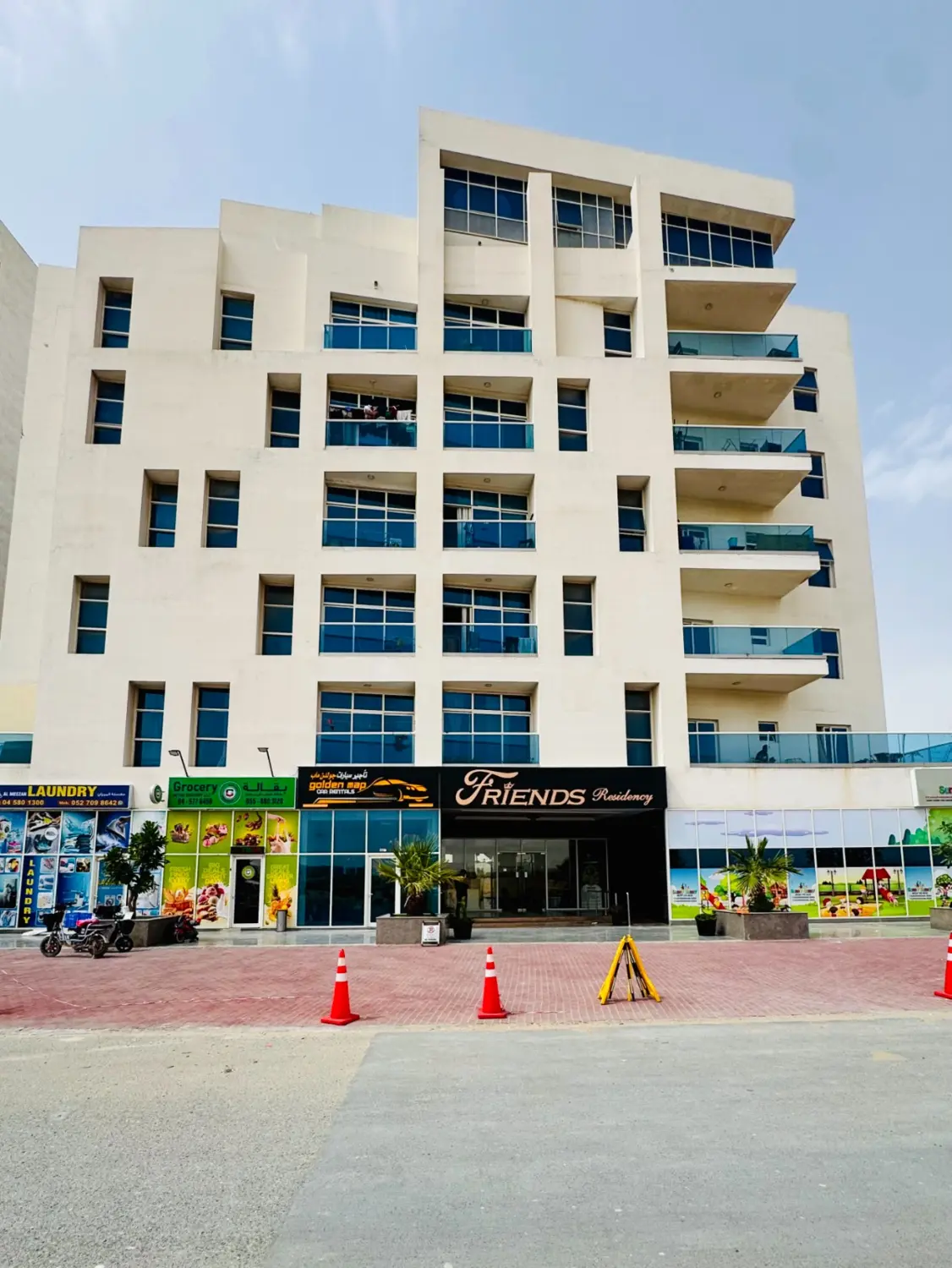
Friends Residency building image from the Friends Property Management website.
Owning a Dubai property does not mean you can always be close to it. You may live in another country, travel for work or spend part of the year away. When a question arrives about a repair, an inspection or a resident request, the hard part is often not the distance. It is knowing what needs your decision and what can wait for the next useful update.
A clear monthly property management plan helps turn scattered messages into a small set of understandable decisions. It gives the owner, management team and relevant service providers a shared way to record what happened, what remains open and what should happen next. It also helps residents understand who is handling their request while the owner is away.
Friends Property Management lists property, facility, community, budget and inspection services on its website. The right scope depends on your asset and agreement. This guide explains a practical communication method for an owner who cannot visit often. It is not a legal or investment plan, and it does not give a manager authority that has not been properly agreed.
Start by defining who can decide what
Before choosing a report format, discuss responsibilities. Which routine actions are included in the management scope? Which matters need the owner’s approval? Who communicates with residents and contractors? Clear answers prevent the owner being asked about every small task while an important decision waits without a named person responsible for it.
Write the answer in ordinary language. For example, a team may coordinate an assessment, present the findings and request approval for a proposed repair. That is different from having permission to approve every quotation or change a tenancy arrangement. Keep the practical process aligned with the actual agreement and any requirements that apply to the property.
Do not use a long absence as a reason to assume unlimited authority. Equally, do not leave the team without a route to obtain a timely decision. Agree an approval process that works across your time zone and normal availability. If you have a representative, make sure their role and the way instructions are verified are clear to everyone who needs to use them.
The property management service is a starting point for discussing your asset’s needs. Ask for a written scope showing responsibilities, approvals and reporting. A helpful relationship begins with a shared understanding of the work, rather than a promise that one short monthly message will cover everything.
Build one reliable property record
A useful property record identifies the asset, the people involved and the current operating information. Keep the unit or building name, main contacts, agreed access route and relevant service records together. Use a system that the responsible team can maintain, rather than spreading important details across personal phones and several unrelated chat groups.
Give documents clear names. A quotation should be distinguishable from an invoice. An inspection note should show its date and location. A photograph should be linked to the issue it records. This makes later decisions easier because the owner can understand the evidence without asking the team to explain the history from the beginning each time.
Keep access to the record appropriate to the role. A contractor may need the location of a fault and the appointment contact, but not unrelated tenant information. A resident may need an update on their request, but not a private owner discussion. Share what is needed through the agreed method and keep sensitive material out of broad, informal message groups.
Use a reference for each open matter
A simple reference helps connect messages, photographs and decisions. “Kitchen tap leak, unit reference, reported date” is more useful than “the same problem again.” The format does not need to be complicated. It needs to stay consistent enough that the owner and team can find the right issue when a new update arrives.
Make the monthly report answer five questions
A report should help the owner understand the asset, not merely show that messages were sent. Five questions provide a practical structure: what changed, what was completed, what remains open, what needs a decision and what is planned next? These questions work for a single apartment and can be expanded for a larger managed property.
Start with a short summary. Highlight changes that affect the owner’s next action, such as a quotation awaiting approval or a recurring fault needing further assessment. Put the supporting detail below it. This allows an owner with limited time to see the important point first, while still being able to review the evidence behind it.
Keep facts, estimates and proposals separate. A completed inspection is a fact. A contractor’s suggested cause may still be an assessment. A proposed repair is not completed work. A useful report labels each stage so the owner does not mistake an idea for an instruction or a scheduled appointment for a resolved issue.
The report should also say who is responsible for the next step. “Awaiting action” is too vague when nobody can tell whose action is needed. “Owner to review the attached quotation” or “management team to obtain the missing inspection note” gives the matter a direction that can be followed at the next review.
Give decisions a short, consistent format
When approval is needed, present the question clearly. Name the issue, explain the proposed action, attach the relevant evidence and identify what the owner is being asked to approve. If there are alternatives, explain the practical difference between them. A long chat history should not be the only way to discover the actual decision.
Ask for an answer that matches the request. An owner saying “please look into it” is not the same as approving a specific scope and amount. If a reply is unclear, the management team should seek clarification through the agreed channel. A short extra question at that stage can prevent confusion between the owner, contractor and resident later.
Record the decision with its date and the information it was based on. If the scope changes, obtain the appropriate new approval instead of treating the original answer as permission for every later addition. This is particularly useful for an owner away from Dubai, because they may not see the changed conditions directly.
Separate a recommendation from an approval
The manager can explain why an option is suggested without hiding that the owner still needs to decide. The owner can ask for a fuller explanation without starting the whole process again. A clear boundary makes both sides more confident: the team knows what it may arrange, and the owner knows what their reply will authorise.
Review maintenance as a set of open questions
A monthly maintenance list should do more than count how many visits occurred. For each open issue, record the reported symptom, the current finding, the work arranged and what remains uncertain. This helps distinguish a new problem from a repeat report and a completed repair from a temporary change that still needs observation.
Ask for proportionate evidence. A useful photograph or short completion note may explain a small job well. A more involved issue may need a professional assessment, further records or a clearer account of the work. The right level depends on the problem. The goal is a decision the owner can understand, rather than a large folder of pictures with no explanation.
Technical work should stay with appropriately qualified people. An owner reading a report remotely should not be expected to diagnose an electrical or mechanical fault from a picture. The report can identify the practical effect and the recommended next step while making clear where specialist input is still needed.
The facility management service can provide a route for discussing technical coordination within an agreed scope. Keep the connection between property management and technical work clear. Knowing who communicates with the owner is not the same as knowing who assesses or completes the repair.
Treat resident communication as part of the record
Residents usually need a practical answer: has the request been received, who is handling it and what happens next? A person should not need to repeat a report to several contacts because the owner is abroad. Agree the normal reporting route and explain when another contact should be used.
Keep updates specific without promising what has not been confirmed. “The assessment is being arranged” is different from saying the repair will be finished at a particular time. If access or a contractor response is still outstanding, say so plainly. A clear explanation of the next step is often more useful than a cheerful but uncertain completion promise.
Include unresolved communication points in the owner’s report where they affect a decision or follow-up. That does not mean copying every private message into the monthly pack. Summarise the relevant issue, the action taken and the next responsibility. Keep resident information limited to what is needed for the management purpose.
The community management service describes another part of the company’s service range. Ask how resident communication, shared facilities and requests would be handled for your asset. The exact division should be clear, especially when several parties are involved in a building or community.
Keep the money explanation connected to the work
A useful cost update links an amount with the service, document and approval it relates to. The owner should be able to understand what a figure represents without guessing whether it is a quote, an amount awaiting payment or a cost already recorded. Clear labels make a remote review much easier.
Avoid presenting a total without the background needed to assess it. A repair amount may make more sense beside the agreed scope, the reason for the work and the record of completion. If an item differs from the earlier proposal, explain the difference and show the relevant decision. Do not expect the owner to find the change by comparing several unlabelled files.
This guide does not decide what an owner should spend or how a particular cost should be treated. Those decisions depend on the arrangement and, where needed, appropriate professional advice. The practical aim is to keep the record understandable so the right person can review the item with the information they need.
The budget management service is a useful place to begin a discussion about expense planning and reviewable reporting. Ask which records and reporting tasks are included for your property. A budget heading alone does not establish the full service or the authority to make a payment.
Plan inspections around a clear purpose
An inspection should answer a question. You may need a condition update, evidence about a reported defect or a check connected with an agreed handover. Naming the purpose helps the team arrange the right visit and explains why the resulting record matters to the owner.
Agree access through the proper process. A landlord’s absence does not remove the need to respect the arrangements that apply to the property and its occupants. Confirm who coordinates the appointment, what is being checked and how the outcome will be reported. Keep keys and access information under the agreed controls.
Ask for observations that distinguish what was seen from what needs further assessment. A stain, a noise or a visible defect can be recorded without turning it into an unsupported technical conclusion. Where a specialist is needed, the report should say what the next assessment is expected to clarify.
See the inspection and survey service to discuss the available scope. Confirm what the selected inspection includes, its limits and the form of the record. A visit is more useful when the owner understands what it can establish and what it cannot.
Use time zones without letting decisions disappear
Agree the best normal contact method and the hours when you are usually available. If you live in another time zone, include that in the communication plan. The management team can then group ordinary questions sensibly instead of sending separate requests while you are asleep and assuming silence means an answer.
Also agree how genuinely urgent matters are escalated under your arrangement. Keep that route separate from the ordinary monthly report. An urgent situation should not wait for a reporting date simply because the owner is away. The specific response and authority need to be established before a problem occurs, with appropriate local services used where required.
Choose a backup contact only where their role is properly agreed. Keep their details current and make clear when they may be approached. Do not leave the team choosing between several relatives who have different views about the property. One reliable escalation route is easier to use than a list of people with no defined responsibility.
End each update with the next contact point
A monthly report can state when the next normal review is expected and which open decisions need an earlier reply. This gives the owner a manageable routine. It also helps the team avoid chasing every item with the same urgency when some questions can reasonably be grouped into the next planned discussion.
A simple example of a monthly review
Imagine an owner who is away for several months. During one reporting period, a minor repair is completed, a second issue needs an assessment and a resident asks about an access appointment. The report begins with these three points, then links each one to its reference and supporting record.
The completed repair has a short outcome note. The assessment request explains what remains unknown and what the owner is being asked to approve, if approval is needed. The appointment item names the person coordinating access. The owner can understand the position without reading every message sent during the month.
At the review, the owner asks one focused question and gives one clear decision. The team records both, updates the open list and confirms the next responsibility. The next report can then show progress against the same references rather than creating a fresh story that is difficult to compare with the previous month.
This is an example of a communication method, not a promise of a particular service package. Your management agreement defines the scope. You can use the company’s service overview to identify the areas you want to discuss and build a proposal around your actual asset.
Ten frequently asked questions
1. Can a landlord manage Dubai property while living elsewhere?
A landlord can arrange appropriate local management support, but the practical and formal responsibilities need to be clear. Start by identifying the property, the help required and the decisions you want to retain. Discuss the scope, authority, communication and records before relying on a remote routine. This guide explains organisation, rather than giving legal advice about any individual arrangement.
2. What should I receive in a monthly update?
Ask for a short summary of changes, completed work, open matters, required decisions and the next plan. Supporting records should make the important points understandable. A report does not need to repeat every message. It should help you see the asset’s current position and know who is responsible for the next action on each significant open item.
3. Should the manager ask me about every repair?
That depends on the agreed authority and service scope. Define which routine actions can be coordinated and which decisions need approval. Avoid relying on an informal assumption because the owner is away. The process should allow useful work to move while keeping the boundary of responsibility clear. Review that process if repeated questions show that the scope is not understood.
4. How do I approve work without seeing the property?
Request a clear description of the issue, appropriate evidence, the proposed scope and the decision required. Ask questions if important information is missing. Give a reply that identifies what you approve, and keep the record with the relevant quotation or assessment. If the work changes later, the team should follow the appropriate process for the changed scope rather than assuming unlimited approval.
5. What makes a remote repair record useful?
It connects the reported issue with the assessment, agreed work and outcome. Photographs should identify the location and purpose. The record should distinguish completed work from something awaiting further checking. Technical conclusions belong to qualified people where relevant. A large folder is not automatically a useful record if the owner cannot tell which problem the images and documents explain.
6. How should tenants or residents contact the team?
Use the normal reporting route agreed for the property, with an appropriate separate route for urgent situations. Residents should know who receives the request and how the next step is communicated. The owner’s report can summarise significant matters without exposing unnecessary private messages. Keeping one clear route helps prevent the same issue being passed between several contacts without a responsible person.
7. How often should an inspection take place?
The appropriate plan depends on the asset, purpose, agreed service and applicable arrangements. Define what you want the inspection to establish rather than choosing a frequency without a reason. Confirm access, scope and reporting. A routine condition check and an assessment of a reported defect may need different arrangements, so do not treat every visit as interchangeable.
8. What if I cannot answer during Dubai working hours?
Tell the team your time zone and normal availability. Agree how ordinary questions are grouped and what happens when an earlier decision is genuinely needed. A backup contact may help if their role is properly established. The important point is to define the route before a problem arises, rather than leaving staff to guess whether silence means approval or unavailability.
9. Should all costs appear in one monthly total?
A summary total can be helpful, but it should connect to the records that explain it. Make clear whether an item is proposed, approved, outstanding or recorded as paid. Link the amount to the relevant work or service. Ask for appropriate advice where accounting or legal treatment is involved. This guide does not decide how a specific expense should be classified.
10. What should I prepare before requesting a management proposal?
Provide the asset type, location, current arrangement and the main problems you want help with. Explain that you will be away and describe your reporting and decision needs. Ask for a scope covering responsibilities, access, approvals and communication. Share detailed private records only through the agreed appropriate method. A clear brief gives the team a better starting point for an asset-specific proposal.